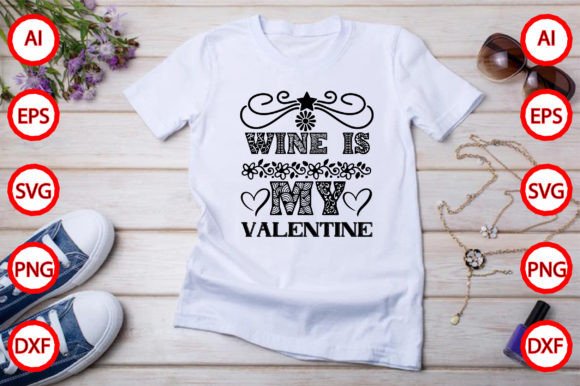
Wine is My Valentine Graphics: Freebies Review
As a graphic designer who has spent over a decade refining brand identities and creating marketing visuals for small businesses, I approach every new asset with a critical eye. We are often inundated with Freebies that look flashy in a thumbnail but fail to hold up under the scrutiny of professional print production or digital scaling. However, when I recently pulled the Wine is My Valentine file into my workspace for a potential client project, I found myself pleasantly surprised by its versatility and structural integrity.
The first impression of this graphic design asset is one of playful sophistication. It does not scream for attention with chaotic elements; rather, it invites the viewer in with a warm, celebratory mood. For a recent project involving a boutique winery launching a limited-edition Valentine’s Day collection, I needed something that balanced romantic sentiment with modern design sensibilities. This piece fit that brief perfectly. It represents a style that is increasingly popular in the creative marketplace: whimsical yet clean, allowing it to sit comfortably alongside both serif font and sans serif font typography without causing visual clutter.
Integrating the Asset into Real Client Workflows
When evaluating a digital product for commercial use, I always consider how it performs across various mediums. The Wine is My Valentine design is not just a static image; it is a flexible component of a larger design bundle. In my test runs, I utilized the vector files to create custom packaging design concepts for wine bottle labels. Because the lines are crisp and the shapes are well-defined, the illustration scales beautifully from a small sticker on a cork to a large hero graphic on a storefront window display.
For clients in the handmade business sector, particularly those using cutting machines, the SVG functionality is crucial. I tested the file in a simulated Cricut project workflow, and the paths were clean, requiring minimal cleanup before cutting vinyl for tote bags or heat transfer for t-shirt design. This level of precision is what separates amateur clipart from professional-grade design assets. Whether you are creating a sublimation design for mugs or a printable design for wall art, the integrity of the original artwork remains intact.
Where This Design Shines
This asset works best in layouts that allow it breathing room. I recommend using it as a focal point in social media graphics, such as Instagram posts or Pinterest pins, where the emotional appeal of the imagery can drive engagement. It also serves as an excellent decorative accent in editorial design for lifestyle blogs or digital magazines focusing on romance, food, or leisure. When paired with a handwritten font or a bold display font, it creates a strong visual hierarchy that guides the eye naturally through the content.
Furthermore, for Etsy product sellers and print-on-demand entrepreneurs, this type of illustration is gold. It fits seamlessly into seasonal campaigns, allowing for quick turnaround times without sacrificing quality. I have used similar assets to build entire brand identity kits for pop-up shops, where the consistent use of thematic marketing visuals helps establish immediate recognition and trust with the audience.
Constraints and Careful Application
However, no design asset is universal. There are specific contexts where Wine is My Valentine should be used with caution. Due to its detailed nature, it may lose clarity if scaled down too aggressively for small favicon icons or intricate footer elements in web design. Additionally, placing this graphic over complex, busy backgrounds can reduce contrast and hinder readability. It thrives on negative space. If your project requires a minimalist corporate aesthetic or a strictly utilitarian layout, this whimsical style might clash with the desired tone of professionalism.
Designers must also be mindful of color interactions. While the default colors are charming, they may not align with every small business branding palette. This is where the file formats provided become essential. You are not stuck with a flat PNG; you have control.
Technical Breakdown and File Utility
From a technical standpoint, the delivery of this asset is robust. Upon downloading, you receive a zip file containing multiple formats, ensuring compatibility across different software ecosystems. Specifically, you get an Ai file, which is indispensable for Adobe Illustrator users who need to change the color to match specific brand guidelines. There is also an EPS file, which ensures broad compatibility for Adobe Illustrator, Inkscape, Corel Draw, and other similar vector-based software. Finally, the inclusion of an SVG file makes it ready for Cricut and other digital cutting machines, bridging the gap between digital design and physical craft.
This variety supports a wide range of workflows. If you are building a Canva template for clients who do not have access to professional design software, you can import the SVG or a high-resolution PNG derived from the vector source. This flexibility is vital for designers who need to deliver editable files to their clients while maintaining the quality of the original creative design.
Practical Designer Notes for Commercial Use
Before deploying Wine is My Valentine in a final client deliverable, I always run through a checklist. First, test the design in black and white. This reveals any issues with line weight or spacing that might be hidden by color. Second, check the contrast on both light and dark backgrounds to ensure the message remains legible. Third, preview the asset at extreme sizes—both very small and very large—to confirm that the vector paths hold up without pixelation or awkward anchor points.
It is also crucial to inspect the transparency if you are using rasterized versions for product mockup presentations. Ensure there are no stray pixels around the edges. Most importantly, always review the licensing terms. While this is categorized under Freebies, confirming the scope of the commercial license is non-negotiable for professional work. You need to know if you can use it for unlimited client projects or if there are restrictions on resale.
In conclusion, Wine is My Valentine is a strong contender for any designer’s toolkit. It offers the right balance of charm and technical reliability, making it suitable for everything from sticker design to comprehensive logo design explorations. By understanding its strengths and limitations, you can leverage this asset to create polished, engaging, and commercially viable designs that resonate with your target audience.