Reviewing Lucky Little Lassie for Real Embroidery Projects
As a designer who has spent countless hours digitizing and stitching out thousands of patterns, I have learned that the true test of any design is not how it looks on a screen, but how it behaves under the needle. When I first encountered Lucky Little Lassie, my immediate reaction was one of cautious optimism. It sits in the Freebies category, which often raises questions about quality and completeness, but the provided Graphics suggest a versatility that goes beyond simple digital decoration. This review breaks down how this design performs when translated from a digital file into a tangible, stitched reality.
First Impressions and Visual Personality
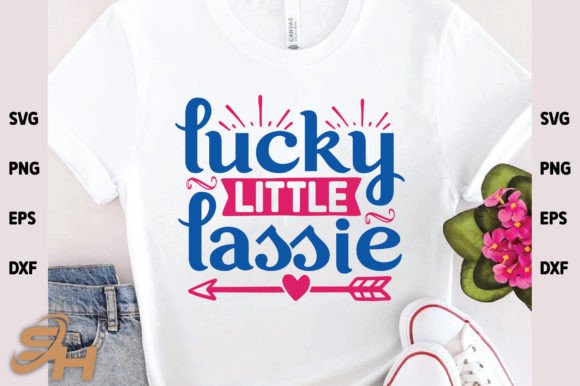
The mood of Lucky Little Lassie is undeniably cheerful and whimsical. The shape and layout suggest a design that relies heavily on clean lines and balanced proportions rather than overwhelming detail. For an embroidery designer, this is a good sign. Overly complex designs often suffer from thread breaks and puckering, especially when scaled down. The visual personality here feels approachable, making it a strong candidate for projects where warmth and friendliness are key selling points. It does not scream for attention with aggressive density; instead, it invites the viewer in with a sense of playful charm.
When evaluating the theme, I consider where this aesthetic fits best. It naturally belongs to projects aimed at children, spring-themed collections, or lighthearted home decor. The lack of excessive intricacy means it can stand alone as a focal point without needing heavy background fills that might distort delicate fabrics.
Real-World Application: The Custom Tote Bag Test
To truly understand the utility of Lucky Little Lassie, I imagined a specific real-life scenario: preparing a custom embroidered tote bag for a local craft fair. Tote bags are a staple for any Etsy seller or small shop product line because they offer a large, flat canvas. However, canvas fabric has a distinct weave that can interfere with small details.
In this context, the design’s clarity is crucial. If the elements of Lucky Little Lassie are too fine, they might get lost in the texture of the cotton canvas. Conversely, if the design is bold enough, it becomes a striking tote bag design that catches the eye from a distance. I envision using a fill stitch for larger areas to ensure coverage and durability, while relying on satin stitch borders to define the edges sharply. The result would be a handmade product that feels substantial and well-crafted, enhancing customer trust through professional presentation.
Versatility Across Product Lines
Beyond tote bags, this design shows promise for various other applications. For sweatshirt embroidery, the design needs to hold up against the plush texture of fleece or French terry. Here, the simplicity of the graphic works in its favor. A dense, complicated pattern might sink into the pile of the fabric, but a cleaner design like this remains visible. It could easily serve as a centerpiece for a personalized gift, such as a child’s hoodie or a family reunion shirt.
For baby embroidery, softness is paramount. Using Lucky Little Lassie on a onesie or baby blanket requires careful attention to stitch density. High-density stitching can feel scratchy against sensitive skin. By adjusting the settings to use more running stitch underlays and lighter fill densities, the design can remain visually appealing without compromising comfort. This adaptability makes it a valuable asset for craft business owners who need to pivot between different product types quickly.
Considerations for Challenging Surfaces
While the design is versatile, there are areas where caution is necessary. Curved surfaces, such as caps or hats, present a unique challenge. The distortion caused by the curve can warp the proportions of Lucky Little Lassie. If the design includes any text or symmetrical elements, they must be checked carefully in a preview mode. Additionally, embroidered patch creation requires high stability. If the design is intended for a cut-edge patch, the outer boundaries must be robust enough to prevent fraying after washing.
Dark fabrics also require strategic planning. If you are stitching this onto a black navy sweatshirt, standard thread colors may not pop. You might need to add a white underlay or choose high-contrast thread colors to ensure the design does not disappear into the background. Testing the design in black and white mockups before stitching can save significant time and material costs.
Technical Notes for the Serious Stitcher
Before committing to a full production run, there are several practical steps every designer should take. First, always test the design on scrap fabric that matches your final project material. This allows you to check for puckering and adjust your stabilizer choice accordingly. For stretchy fabrics, a cut-away stabilizer is often necessary to maintain shape integrity over time.
It is also essential to verify the technical specifications. The product description notes that this is an INSTANT and DIGITAL DOWNLOAD containing SVG, PNG, EPS, and DXF files. While these formats are excellent for cutting machines and graphic design, they are not native machine embroidery formats like PES or DST. This distinction is critical. If you are using this for commercial embroidery on a multi-needle machine, you will likely need to convert these graphics into a stitch file using digitizing software. Always confirm whether the license permits this conversion and subsequent sale of finished items.
Check the hoop size requirements implicitly suggested by the design dimensions. If the design is large, ensure your machine can accommodate the necessary hoop. For smaller details, inspect the zoomed-in view to ensure that tiny elements will not collapse during stitching. A digital embroidery file that looks perfect on screen can sometimes fail in practice if the stitch paths are not optimized for the specific thread type being used.
Enhancing Brand Consistency and Value
Integrating Lucky Little Lassie into your product line can enhance brand consistency if it aligns with your existing aesthetic. For boutique branding, having a cohesive look across different items—such as matching aprons and kitchen towels—creates a stronger visual identity. This design can serve as a recognizable motif that customers associate with your shop’s quality and style.
Furthermore, the perceived value of a finished product increases when the embroidery is crisp and well-executed. Buyers engage more deeply with items that show attention to detail. By using a design that is inherently balanced and clear, you reduce the risk of stitching errors, leading to higher customer satisfaction and fewer returns. Whether used for holiday embroidery gifts or everyday custom apparel, the right execution of this design can elevate a simple item into a cherished keepsake.
In conclusion, Lucky Little Lassie offers a solid foundation for various creative projects. Its strength lies in its simplicity and adaptability. By understanding its limitations and leveraging its visual appeal, designers and makers can create high-quality, marketable goods that resonate with their audience. Always remember to validate the technical requirements and licensing terms to ensure a smooth and profitable production process.