Reviewing No Rest for the Wicked for Real Embroidery
As a designer who has spent countless hours staring at digitized files and watching needles punch through fabric, I have learned that not every pretty graphic translates well into thread. When I first encountered No Rest for the Wicked, my initial reaction was one of cautious curiosity. It sits in the Freebies category under Graphics, which often means variable quality, but this specific design caught my eye because of its bold thematic potential. Before I commit any client project or small batch production to this file, I need to know how it behaves under the needle, not just how it looks on a screen.
First Impressions and Visual Personality
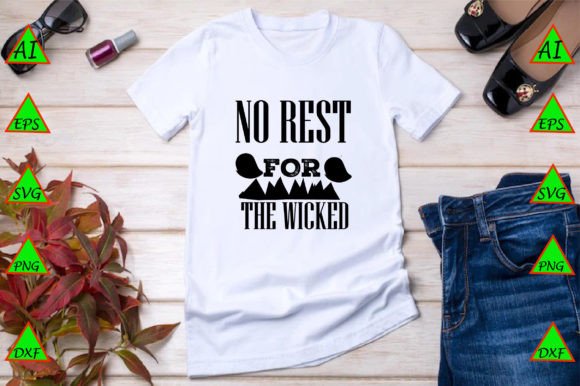
The phrase itself carries weight. It suggests rebellion, energy, and perhaps a touch of dark humor. Visually, the layout appears to rely on strong typography mixed with illustrative elements. For an embroidery designer, this combination is always a balancing act. The mood it creates is edgy yet playful, making it a natural fit for projects that target a younger demographic or those looking for statement pieces rather than subtle accents. The visual personality is loud, which means it demands attention. In a retail setting or on an Etsy shop page, this kind of design stops the scroll. However, that same boldness requires careful handling during the stitching process to ensure it does not become a messy blob of thread.
Real-World Application: The Custom Tote Bag Test
To truly evaluate No Rest for the Wicked, I imagined applying it to a heavy canvas tote bag. This is a staple product for many craft businesses and boutique brands. The sturdy texture of canvas provides an excellent base for designs that might have higher stitch density. In this scenario, the design would serve as the central focal point. I pictured using a contrasting thread color to make the letters pop against the natural beige or black fabric. The result would be a durable, washable item that feels substantial. Customers buying handmade products often look for durability, and a well-stitched graphic on a tote bag signals quality. If the design holds up without puckering the fabric, it becomes a reliable asset for any small shop product line.
Versatility Across Apparel and Home Decor
Beyond tote bags, this design has legs in custom apparel. Imagine it embroidered on the back of a denim jacket or the chest of a black sweatshirt. The theme fits perfectly with streetwear aesthetics. For holiday embroidery or gift seasons, it could be adapted for aprons or kitchen towels, adding a witty touch to domestic items. However, the application changes depending on the substrate. On a baby item, the theme might be too mature, so I would reserve it for adult-sized personalized gifts. For nursery decor, it likely does not fit unless the brand identity is specifically alternative or gothic. Understanding where the design belongs is half the battle in running a successful craft business.
Technical Considerations for Stitching
When dealing with a design like this, technical execution is everything. Since the product description indicates you receive Ai, EPS, and SVG files, it is crucial to understand what these formats mean for embroidery. These are vector graphics, not native machine embroidery files like PES or DST. This means you, the designer, must digitize the artwork yourself or use software to convert it. This step is critical. You must decide where to use satin stitch for clean edges and where fill stitch is appropriate for larger areas. Improper digitizing can lead to excessive pull and distortion.
Stitch density is a major concern here. If the letters are thick, they may require a lot of thread. On stretchy fabric, such as a t-shirt, high density can cause the garment to pucker or warp. I always recommend testing the design on scrap fabric first. Use the same stabilizer you plan to use for the final product. For knits, a cut-away stabilizer is usually best to support the weight of the thread. For woven fabrics like cotton or canvas, a tear-away might suffice, but only if the design is not overly dense.
Navigating Fabric and Hoop Constraints
Placement matters. If you are working with small hoop sizes, you may need to scale down No Rest for the Wicked. Be careful when doing this. Tiny lettering can become illegible if the stitches merge together. Always inspect small details after a test run. If the design includes intricate corners or sharp angles, ensure your digitizing software handles them with proper underlay stitches to prevent gaps. On curved surfaces like caps, the design needs to be adjusted for the curvature. A flat design will distort on a hat, so professional digitizing techniques are required to compensate for the shape.
Thread colors play a huge role in readability. On dark fabric, light threads provide necessary contrast. On light fabric, dark threads create definition. I advise creating black and white mockups to check the silhouette of the design. If it loses its shape in monochrome, it may be too complex for embroidery. Simplifying the design before stitching can save time and thread costs.
Commercial Viability and Brand Consistency
For Etsy sellers and digital product sellers, the value of a design lies in its versatility and appeal. No Rest for the Wicked offers a distinct vibe that can help build brand consistency for shops focusing on edgy, modern, or humorous items. It enhances visual appeal and can drive buyer engagement if presented well in printable mockups and product photos. However, since this is listed under Freebies, you must verify the license terms. Can you sell finished products? Can you resell the digital file? Never assume. Check the specific license included with the download. Using a free graphic for commercial embroidery projects without permission can lead to legal issues.
Customer trust is built on consistency. If you use this design on a range of products, from patches to pillow covers, ensure the quality remains high. A poorly stitched design damages your reputation faster than a good design builds it. Take the time to refine the digitizing. Adjust thread colors to match your brand palette. Make sure the finished product looks professional, not homemade in a negative sense.
Final Verdict for Designers
In conclusion, No Rest for the Wicked is a promising asset for designers willing to put in the technical work. It is not a plug-and-play solution since it comes in vector formats, but this offers flexibility. You can change colors in Illustrator or Corel Draw before digitizing, allowing for complete customization. This control is valuable for creating unique handmade products. Whether you are making embroidered patches for a local band or custom apparel for a boutique, this design has potential. Just remember to respect the materials, test thoroughly, and honor the licensing terms. With careful execution, it can become a standout piece in your portfolio of design assets.